
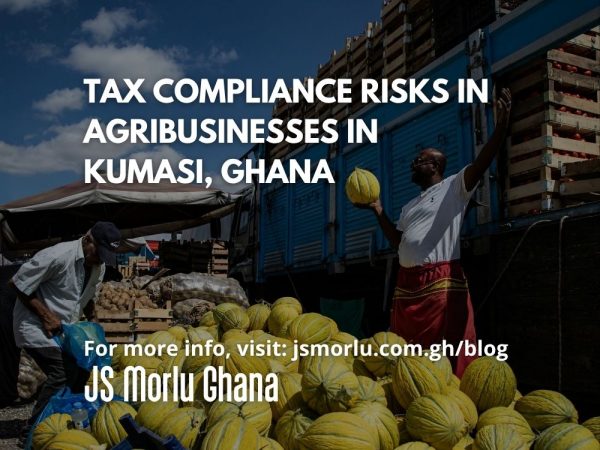
Taxation remains one of the most sensitive operational areas for agriculture businesses in Ghana, particularly in commercial hubs like Kumasi where trading activity is high and business structures vary widely. Unlike more formal industries, many agribusinesses operate in environments where transactions are seasonal, documentation is inconsistent, and financial systems are still developing.
This creates a gap between actual business activity and what is reported for tax purposes. As Ghana continues to strengthen its revenue collection systems, including digital filing and enforcement mechanisms, agribusinesses are increasingly required to align their operations with formal tax expectations.
Within this evolving landscape of tax compliance Ghana, agriculture businesses must navigate not only statutory obligations but also practical difficulties in interpreting and applying tax rules to real-world farming and trading activities.
Industry Context: How Agribusinesses Operate in Ghana
Agribusinesses in Ghana are typically structured as smallholder farms, SMEs, cooperatives, or mid-sized processing and distribution companies. In Kumasi, many of these businesses operate informally or semi-formally, often transitioning between traditional and structured business models.
Key characteristics of the sector include:
- Seasonal revenue cycles: Income is heavily dependent on planting and harvest seasons, leading to irregular cash flows.
- Mixed operational structures: Many agribusinesses combine personal and business finances.
- Limited formal documentation: Record-keeping practices are often inconsistent or manual.
- Regulatory exposure: Businesses interact with multiple agencies, including tax authorities, local assemblies, and agricultural regulators.
These characteristics directly influence how businesses manage taxation, accounting, and reporting obligations.
Key Tax Compliance Challenges Facing Agribusinesses in Kumasi
1. Difficulty Understanding Tax Obligations
Many agribusiness owners struggle to fully understand their tax responsibilities. The Ghanaian tax system includes income tax, VAT, withholding tax, and other regulatory obligations.
For agriculture businesses, determining which activities are taxable and how they should be reported is often unclear. This is especially common in informal supply chains where transactions are not consistently documented.
2. Inconsistent Record-Keeping Practices
A major challenge in accounting challenges SMEs Ghana is poor financial record management. Many agribusinesses rely on handwritten notes, memory-based tracking, or incomplete spreadsheets.
This leads to:
- Underreported income
- Overstated expenses
- Missing transaction evidence
- Difficulty in preparing accurate tax returns
Without structured accounting systems, compliance becomes reactive rather than proactive.
3. VAT Complexity in Agricultural Transactions
VAT compliance is particularly challenging in the agriculture sector. While some agricultural products are exempt at certain stages, processed goods and value-added services may be taxable.
This creates confusion around:
- When VAT should be charged
- How input VAT should be treated
- Cross-border agricultural trade taxation
- Documentation requirements for exemptions
Misinterpretation often results in errors that attract penalties or audits.
4. Seasonal Income and Tax Estimation Issues
Agribusinesses typically experience fluctuating income levels depending on planting and harvest cycles. However, tax obligations are assessed annually or periodically, requiring consistent financial forecasting.
This mismatch leads to:
- Underpayment of taxes during peak seasons
- Cash flow strain during tax filing periods
- Difficulty estimating provisional taxes
5. Limited Awareness of Filing Deadlines and Penalties
In many cases, businesses are unaware of filing timelines or underestimate the consequences of late submissions. This includes penalties for:
- Late filing of returns
- Failure to submit accurate financial statements
- Non-registration or incorrect tax classification
Such gaps increase exposure to compliance risk.
6. Weak Internal Controls and Informal Operations
Many agriculture businesses in Kumasi operate without formal internal control systems. This includes lack of approval hierarchies, expense verification processes, and audit trails.
The absence of structured systems affects both compliance and operational efficiency.
Impact of Poor Tax Compliance on Agribusinesses
The consequences of weak tax compliance extend beyond penalties. They include:
- Financial Inefficiency
Poor tax planning and inaccurate reporting often lead to unnecessary tax burdens or missed deductions. - Compliance Risks
Businesses may face audits, penalties, or legal action due to incorrect filings or incomplete records. - Revenue Loss
Leakages in financial tracking can result in unrecorded sales or inflated costs, affecting profitability. - Weak Decision-Making
Without accurate financial data, business owners struggle to make informed decisions on expansion, pricing, or investment. - Reduced Access to Financing
Financial institutions often require reliable records before approving loans or credit facilities. Weak compliance reduces credibility.
Practical Approaches and Best Practices
While challenges are significant, agribusinesses can adopt several practical measures to improve compliance and financial management:
- Strengthen Record-Keeping Systems
Maintaining consistent daily transaction records whether digital or manual helps ensure accuracy in reporting. - Separate Business and Personal Finances
Clear separation improves transparency and reduces confusion in financial statements. - Improve Understanding of Tax Categories
Basic awareness of income tax, VAT, and withholding tax obligations reduces compliance errors. - Introduce Internal Control Practices
Simple approval processes for expenses and procurement help reduce fraud and errors. - Adopt Structured Accounting Systems
Even small-scale digital tools can significantly improve financial accuracy and reporting consistency.
Industry Insight: What Experts Commonly Observe
Many professional advisory and accounting firms working with agribusinesses in Ghana observe that most compliance challenges are not caused by unwillingness, but rather by limited financial structure and knowledge gaps.
In particular, businesses often underestimate the importance of documentation, assuming that informal systems are sufficient until regulatory scrutiny arises. Over time, this creates avoidable financial and compliance pressures.
Conclusion
Tax compliance in the Kumasi-based agriculture sector remains a complex but critical issue. From inconsistent record-keeping to VAT confusion and seasonal income challenges, agribusinesses face multiple structural barriers that affect their financial stability and regulatory standing.
Addressing these challenges requires more than basic awareness it requires consistent financial discipline, structured systems, and a stronger understanding of compliance obligations.
Agribusinesses may benefit from engaging qualified professionals or advisors to better understand and manage these challenges, particularly as regulatory requirements in Ghana continue to evolve.