
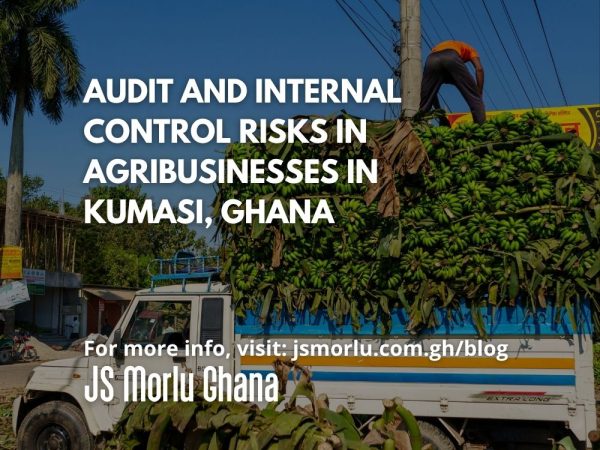
As agribusinesses in Kumasi expand in size and complexity, the need for stronger accountability systems becomes increasingly important. While many businesses focus heavily on production, sales, and survival in a competitive agricultural market, less attention is often given to governance structures that ensure transparency and control.
This creates a situation where business operations grow faster than the systems meant to monitor them. In the absence of proper oversight mechanisms, risks related to financial mismanagement, operational inefficiencies, and compliance weaknesses become more pronounced.
Within the broader context of agribusiness in Ghana, audit and internal control systems are no longer only relevant for large corporations. Even small and medium-sized agribusinesses are now expected to demonstrate basic levels of accountability, especially when engaging with financial institutions, partners, or regulatory bodies.
Industry Context: Internal Control Environment in Agribusinesses
Most agribusinesses in Ghana operate as small or medium-sized enterprises, often family-owned or individually managed. In Kumasi, many of these businesses function with informal systems that prioritize day-to-day operations over structured governance.
Typical characteristics include:
- Owner-driven decision-making with minimal delegation
- Limited documentation of approvals and transactions
- Cash-based operations with weak audit trails
- Informal procurement and payment processes
- Minimal use of formal risk assessment frameworks
These conditions create gaps in accountability and increase exposure to operational and financial risks.
Key Audit, Risk & Internal Control Challenges
1. Weak or Non-Existent Internal Control Systems
One of the most significant issues in audit and internal controls Ghana is the absence of structured control mechanisms. Many agribusinesses do not have formal policies guiding financial approvals, procurement, or expense management.
This leads to:
- Unauthorised spending
- Difficulty tracking transactions
- Increased risk of fraud or misuse of funds
- Lack of accountability across teams
Without internal controls, financial integrity becomes difficult to maintain.
2. Limited Segregation of Duties
In many agribusinesses, a single individual often handles multiple financial functions such as purchasing, record-keeping, and payment processing.
This creates risks such as:
- Errors going undetected
- Increased opportunity for financial mismanagement
- Lack of independent verification of transactions
- Weak audit readiness
Segregation of duties is a key principle of effective internal control, but it is often missing in smaller operations.
3. Poor Documentation and Record Trail
A strong audit process depends on proper documentation. However, many agribusinesses in Kumasi maintain incomplete or inconsistent records.
Common issues include:
- Missing receipts and invoices
- Unrecorded cash transactions
- Lack of supporting documents for expenses
- Poor filing and record storage systems
This makes it difficult to verify financial accuracy during audits or reviews.
4. High Exposure to Operational and Financial Risks
Agribusinesses face multiple risks, including:
- Price fluctuations in agricultural inputs and outputs
- Weather and climate-related disruptions
- Supply chain inefficiencies
- Credit and debt risks from informal lending arrangements
Without structured risk management systems, these risks are often handled reactively rather than proactively.
5. Limited Audit Preparedness
Many businesses only consider audits when required by regulators, lenders, or partners. As a result, they are often unprepared when audits occur.
Challenges include:
- Disorganised financial records
- Lack of reconciled accounts
- Incomplete transaction histories
- Weak understanding of audit requirements
This can lead to delays, additional scrutiny, or negative audit outcomes.
6. Informal Governance Structures
Governance in many agribusinesses is often informal, with little separation between ownership and management responsibilities.
This creates:
- Lack of oversight mechanisms
- Unclear accountability structures
- Difficulty enforcing policies or procedures
- Limited transparency in decision-making
Strong governance is essential for long-term sustainability but is often underdeveloped.
Impact on Agribusiness Operations
The absence of strong audit, risk, and internal control systems can significantly affect business performance:
- Financial Mismanagement
Weak controls increase the likelihood of errors, fraud, and untracked expenses. - Reduced Investor and Lender Confidence
Financial institutions and investors often require reliable audit trails and governance structures before providing funding. - Compliance Challenges
Poor documentation and weak systems can lead to difficulties during regulatory reviews or tax assessments. - Operational Inefficiency
Lack of structured processes often leads to duplication of work, delays, and inefficiencies. - Increased Business Risk
Without risk management systems, businesses are more vulnerable to market, financial, and operational disruptions.
Practical Approaches and Best Practices
Agribusinesses can strengthen their control environment through practical and incremental improvements:
- Establish Basic Internal Control Procedures
Simple approval processes for payments and purchases can significantly reduce financial risks. - Improve Documentation Practices
Maintaining receipts, invoices, and transaction records ensures better audit readiness. - Introduce Segregation of Duties (Even in Small Teams)
Where possible, separating responsibilities improves accountability and reduces errors. - Conduct Periodic Internal Reviews
Regular checks on financial records help identify issues early. - Develop Risk Awareness
Understanding key operational and financial risks allows for better planning and mitigation.
Industry Insight: What is Commonly Observed
Professionals working with agribusinesses in Ghana often observe that internal control weaknesses are not necessarily due to negligence, but rather due to rapid business growth without corresponding systems development.
As businesses expand, informal processes that once worked at a small scale become insufficient, exposing gaps in governance, documentation, and accountability.
Conclusion
Audit, risk management, and internal control challenges remain a critical concern for agribusinesses in Kumasi. These issues affect financial accuracy, operational efficiency, and long-term sustainability.
As the agriculture sector continues to evolve, businesses that strengthen their governance structures and internal systems are better positioned to manage uncertainty and support growth.
Agribusinesses may benefit from gradually building stronger internal controls, improving documentation practices, and developing a clearer understanding of risk and audit requirements to support more sustainable operations.