
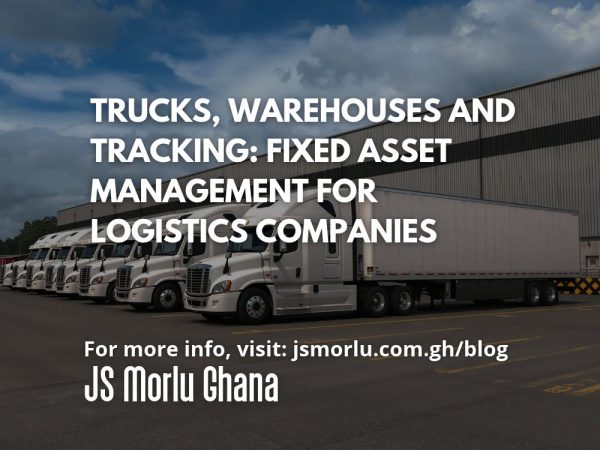
A delivery truck can be fully paid for and still cost a logistics company money every day it remains idle. A warehouse may appear fully operational while damaged racking, poorly maintained equipment and inefficient storage arrangements quietly increase operating costs. Even tracking devices installed across a fleet may provide little value if the information they generate is not used to guide decisions.
For logistics companies, vehicles, warehouses, machinery and handling equipment are more than business assets. They are essential to service delivery, customer satisfaction and profitability. Managing them effectively requires more than recording purchase costs and calculating depreciation. It involves knowing what the business owns, where each asset is located, how well it performs, what it costs to maintain and when it should be repaired, replaced or disposed of.
A structured fixed asset management system helps logistics businesses protect their investments, control operating expenses and maintain reliable service delivery.
Understanding Fixed Assets in the Logistics Industry
Fixed assets are tangible resources that a business acquires for long-term use rather than for immediate resale. In logistics, these assets support transportation, storage, handling and distribution activities.
Common examples include:
- Transportation assets: Delivery trucks, articulated trucks, trailers, vans, tankers and refrigerated vehicles.
- Warehouse infrastructure: Warehouses, loading bays, storage facilities, office buildings and security installations.
- Material handling equipment: Forklifts, pallet jacks, conveyor systems, cranes and loading equipment.
- Technology and tracking equipment: GPS devices, vehicle monitoring hardware, security cameras, scanners and other operational equipment.
- Supporting infrastructure: Generators, fuel storage systems, refrigeration units and workshop equipment.
These assets differ in their cost, expected useful life, operating requirements and maintenance needs. A delivery truck, for example, experiences wear through mileage and road conditions, while a warehouse may require periodic structural inspections and repairs.
Understanding these differences allows management to establish appropriate controls and maintenance plans instead of treating every asset in the same way.
Why Fixed Asset Management Matters for Logistics Companies
1. Controlling Operating and Maintenance Costs
Fuel, repairs, replacement parts, insurance and servicing can account for significant operating expenditure. Without proper records, businesses may struggle to identify which vehicles or equipment consume the most resources.
Consider a logistics company operating 20 delivery trucks. If three trucks regularly require expensive repairs, management should investigate whether the problem results from poor maintenance, excessive usage, unsuitable routes or ageing equipment.
Comparing maintenance expenses against mileage, vehicle age and operating hours helps identify recurring problems. It also allows management to decide whether continued repairs are financially sensible or whether replacement would be more economical.
2. Reducing Downtime and Protecting Service Delivery
When a truck breaks down unexpectedly, deliveries may be delayed, customers may become dissatisfied and additional transportation costs may arise.
The same applies to warehouse equipment. A malfunctioning forklift or conveyor system can slow down loading and unloading, creating delays across the supply chain.
A reliable asset management process helps businesses identify maintenance requirements before equipment fails. This improves operational continuity and reduces the likelihood of emergency repairs disrupting customer commitments.
3. Improving Asset Utilisation
Owning more vehicles or equipment does not automatically mean a company is operating efficiently.
Some trucks may remain underutilised while others are constantly on the road. Certain warehouse sections may be overcrowded while other facilities have unused capacity.
Monitoring utilisation helps management determine whether existing assets are being used effectively. It may reveal that a company can increase delivery capacity through better scheduling rather than purchasing additional vehicles.
This is particularly important when businesses are considering expansion. Understanding current capacity helps prevent unnecessary capital expenditure.
Building an Effective Fixed Asset Management System
1. Maintain a Complete and Accurate Asset Register
An asset register is the foundation of effective fixed asset management. It provides a central record of the company’s assets and their relevant details.
For each asset, the register should capture:
- Asset description and identification number.
- Purchase date and acquisition cost.
- Supplier and supporting purchase documentation.
- Physical location and assigned department.
- Responsible employee or custodian.
- Expected useful life and depreciation method.
- Current condition and maintenance history.
- Insurance details, where applicable.
- Disposal date and proceeds, when sold.
For vehicles, additional information should include registration numbers, chassis numbers, mileage, fuel type and service records. Warehouse equipment may require serial numbers, operating hours and inspection records.
The register should be updated whenever an asset is purchased, transferred, repaired, modified or disposed of.
Without accurate records, businesses risk losing track of equipment, overlooking assets during physical verification and reporting incorrect financial information.
2. Implement Preventive Maintenance
Waiting until a vehicle or machine breaks down before arranging repairs is an expensive approach to asset management.
Preventive maintenance involves servicing and inspecting equipment at planned intervals to reduce the likelihood of unexpected failure.
For logistics companies, this may include:
- Scheduling vehicle servicing based on mileage or manufacturer recommendations.
- Inspecting tyres, brakes, engines and other critical vehicle components.
- Checking forklift safety systems and hydraulic equipment.
- Inspecting warehouse roofs, electrical installations and storage structures.
- Servicing generators and refrigeration equipment.
- Maintaining records of repairs, inspections and replacement parts.
Maintenance schedules should reflect how frequently an asset is used and the conditions under which it operates.
For example, a truck regularly travelling long distances on poor road networks may require closer monitoring than a vehicle used mainly for short urban deliveries.
The objective is to extend useful asset life, improve safety and reduce avoidable interruptions.
3. Use Technology to Track Assets and Monitor Performance
Technology can significantly improve visibility over assets, particularly where businesses operate across multiple locations.
GPS tracking systems allow fleet managers to monitor vehicle locations, routes, movement and utilisation. Depending on the system, they may also provide information about excessive idling, speeding and fuel consumption.
Warehouse management systems and asset tracking solutions can help businesses monitor equipment locations, movement and usage. Barcode labels, QR codes and RFID technology can also simplify asset identification and physical verification.
However, purchasing tracking technology is not enough. The information collected must support management decisions.
For example, if tracking reports consistently show that vehicles spend considerable time idling or making unnecessary journeys, management can investigate route planning, driver practices and delivery scheduling.
The value of technology comes from turning accurate information into practical action.
4. Establish Clear Asset Responsibilities and Controls
Asset management should not be left entirely to the finance or administrative department.
Fleet managers, warehouse supervisors, maintenance personnel, drivers and finance teams all have responsibilities.
A practical control system should establish who can approve asset purchases, assign equipment, authorise repairs, transfer assets and approve disposals.
Drivers should report vehicle damage and mechanical problems promptly. Warehouse supervisors should monitor equipment condition and ensure that assets are returned to designated locations. Finance teams should maintain accounting records and reconcile them with the physical asset register.
Regular physical inspections are equally important. Businesses should verify that recorded assets exist, are in the expected location and remain in usable condition.
These controls reduce the risk of theft, unauthorised use, duplicate purchases and unexplained asset losses.
Financial Reporting, Depreciation and Asset Replacement
Fixed asset management also has direct financial reporting implications.
Under IAS 16, Property, Plant and Equipment, qualifying assets are initially recognised at cost, including directly attributable expenditure necessary to bring them to the location and condition required for their intended operation. Depreciation is then allocated systematically over the asset’s estimated useful life. The useful life and residual value should be reviewed at least at each financial year-end.
The depreciation method should reflect how the asset’s economic benefits are consumed. For example, a company may consider a units-of-production approach for certain equipment where usage provides a more appropriate measure of consumption than the passage of time. Revenue-based depreciation is not appropriate under IAS 16.
For logistics businesses, depreciation records should reflect the actual nature and expected usage of different asset categories. Applying one useful-life assumption to every vehicle, machine and warehouse installation may produce misleading financial results.
Management should also monitor asset impairment. A truck involved in a serious accident, equipment damaged beyond economical repair or a warehouse facility affected by significant physical deterioration may require an assessment of whether its carrying amount remains recoverable.
Most importantly, accounting depreciation should not be confused with physical maintenance. A fully depreciated truck may still be operational, while a relatively new vehicle may require replacement following serious damage.
Asset replacement decisions should therefore consider maintenance costs, downtime, safety, operating efficiency, remaining useful life and expected future benefits.
Common Fixed Asset Management Challenges
Logistics companies often encounter several weaknesses that reduce the effectiveness of their asset management practices.
Incomplete records: Missing purchase documents, outdated asset registers and unidentified equipment make it difficult to establish ownership and monitor asset movements.
Reactive maintenance: Businesses that only respond to breakdowns face higher emergency repair costs and unpredictable operational interruptions.
Poor utilisation monitoring: Companies may purchase additional trucks or equipment without understanding whether existing assets are being used efficiently.
Weak accountability: When assets are not assigned to responsible individuals or departments, damage, misuse and losses may go unnoticed.
Delayed asset disposal: Keeping obsolete or uneconomical equipment for too long can increase maintenance costs, occupy valuable space and tie up resources that could be invested elsewhere.
Addressing these challenges requires consistent procedures, management oversight and accurate operational and financial information.
Practical Steps for Improving Fixed Asset Management
A logistics company does not necessarily need an expensive asset management system to improve its controls. It can begin with a structured process:
- Conduct a physical asset verification: Identify all vehicles, warehouse equipment, machinery and other significant assets.
- Update the asset register: Record relevant financial, operational and identification details.
- Assign responsibility: Ensure every major asset has an identified custodian or responsible department.
- Introduce maintenance schedules: Establish servicing and inspection requirements for each asset category.
- Monitor performance: Review vehicle utilisation, maintenance expenditure, downtime and equipment condition.
- Review replacement requirements: Identify assets that are becoming costly, unsafe or inefficient to operate.
- Reconcile records regularly: Compare physical assets with accounting records and investigate differences.
Management should also establish a small set of performance indicators, such as fleet utilisation, maintenance cost per kilometer, vehicle downtime, fuel consumption and the percentage of scheduled maintenance completed on time.
These indicators provide a clearer picture of whether assets are supporting business objectives or becoming a financial burden.
Conclusion
For logistics companies, effective fixed asset management is essential to controlling costs, protecting investments and maintaining reliable operations. Trucks, warehouses, forklifts and tracking equipment must be monitored throughout their useful lives, from acquisition and deployment to maintenance and eventual disposal.
The practical priority is to maintain accurate records, establish clear responsibilities, schedule preventive maintenance and use reliable information to guide investment decisions. When management understands what the business owns, how those assets perform and what they cost to operate, it can make better decisions about maintaining, replacing or expanding its operational capacity.
Ultimately, successful asset management is not measured by how many vehicles or facilities a company owns, but by how effectively those resources support its operations and long-term financial performance.