
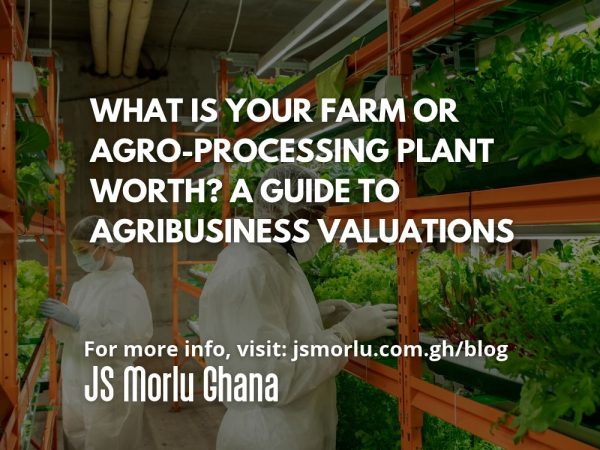
A farm can generate millions in annual sales and still be worth less than its owner expects. An agro-processing plant may have expensive machinery, warehouses and years of operating history, yet its market value may be affected by outdated equipment, inconsistent production, poor financial records or limited access to raw materials.
For agribusiness owners, knowing the value of a business is important when seeking investment, applying for financing, planning expansion, selling an operation or transferring ownership. However, determining that value requires more than adding up the cost of land, buildings, machinery and equipment.
Agribusiness valuation considers the assets, income potential, operating risks and market conditions that influence what a farm or processing business is worth. Understanding the process helps owners make informed financial decisions, negotiate confidently and identify areas that may be reducing the value of their businesses.
What Is Agribusiness Valuation?
Agribusiness valuation is the process of estimating the economic value of a business involved in agricultural production, processing, storage, distribution or related activities.
It applies to different types of operations, including:
- Crop farms producing maize, rice, cocoa, oil palm and vegetables.
- Livestock and poultry farms.
- Fish farms and aquaculture businesses.
- Agro-processing plants producing palm oil, fruit juice, flour, animal feed and other agricultural products.
- Agricultural storage, packaging and distribution businesses.
A valuation provides an informed estimate of what a business or its assets are worth at a particular date, based on a defined purpose and valuation basis.
The distinction matters because the value of a business for a potential investor may differ from the value required for a bank loan, insurance arrangement or financial reporting exercise. The valuation must therefore reflect the reason it is being conducted.
What Determines the Value of a Farm or Agro-Processing Business?
An agribusiness valuation looks beyond the physical assets to understand how effectively the business operates and how much income it can generate.
Several factors influence the final estimate.
1. Land, Buildings and Infrastructure
For farms, land is often one of the most significant assets. Its value depends on location, size, accessibility, soil quality, water availability, permitted use and ownership arrangements.
For an agro-processing plant, the assessment may include:
- Factory buildings and warehouses.
- Processing and packaging facilities.
- Irrigation systems and water infrastructure.
- Storage facilities and cold rooms.
- Roads, drainage and power installations.
A 100-acre farm with reliable irrigation and good road access may be more attractive than a larger farm with poor access and limited water supply. This is because the quality and productive potential of the land can directly affect future operating costs and output.
Ownership documents, lease agreements and land-use restrictions must also be examined. Unclear land rights can delay a transaction or reduce what a buyer is willing to pay.
2. Machinery, Equipment and Technology
Processing equipment, tractors, harvesters, generators, irrigation systems and cold-storage facilities contribute to an agribusiness’s value.
However, the original purchase price does not automatically represent their current worth. Valuers consider the equipment’s age, condition, remaining useful life, maintenance history, capacity and availability of replacement parts.
For example, a processing plant may have machinery purchased for GH₵2 million several years ago. If the equipment is poorly maintained, frequently breaks down or uses outdated technology, its current value may be considerably lower.
Well-maintained machinery, on the other hand, can improve production efficiency, reduce downtime and make the business more attractive to potential investors.
3. Crops, Livestock and Biological Assets
Unlike many other businesses, agribusinesses hold living assets whose condition and value change over time.
These may include:
- Growing crops and plantations.
- Fruit trees and oil palm trees.
- Cattle, poultry, goats and sheep.
- Fish stocks in aquaculture operations.
- Harvested agricultural produce.
The valuation considers the type, quantity, age, health, expected yield, quality and marketability of these assets.
For example, a mature oil palm plantation with several productive years remaining may have a different economic value from a newly established plantation that requires years of investment before generating meaningful returns.
Disease outbreaks, poor weather conditions and declining soil productivity can also affect expected output and future income.
4. Financial Performance and Profitability
A business’s financial records provide important evidence of its ability to generate returns.
Valuers typically examine:
- Revenue and sales trends.
- Operating expenses and profit margins.
- Cash flow and working capital.
- Existing loans and other liabilities.
- Customer and supplier relationships.
- Historical production and sales volumes.
Consistent profits and reliable cash flows can support a higher valuation. However, high revenue alone does not guarantee a valuable business.
Consider a poultry farm generating GH₵1.5 million in annual sales but experiencing high feed costs, significant mortality rates and unpaid customer invoices. Its profitability and cash position may be weak despite its impressive revenue.
This is why accurate financial records are essential. Without them, valuers may struggle to establish the business’s actual financial performance.
5. Market Conditions and Business Risks
Agribusinesses are exposed to risks that can affect their ability to maintain production and profitability.
Important considerations include:
- Changes in commodity prices and customer demand.
- Weather conditions and climate-related risks.
- Pest infestations and livestock diseases.
- Rising costs of fertiliser, feed, fuel and electricity.
- Dependence on a small number of buyers or suppliers.
- Government policies, trade restrictions and regulatory requirements.
A processing plant that depends on one major supplier for raw materials may face production interruptions if that supplier cannot deliver. This dependence can affect the business’s perceived risk and estimated value.
The Three Main Approaches to Agribusiness Valuation
Professional valuers generally use three recognised approaches: the market, income and cost approaches. The most appropriate method depends on the type of business, the purpose of the valuation and the availability of reliable information.
1. Market Approach
The market approach estimates value by comparing the business or asset with similar businesses or assets that have been sold or are available in the market.
For example, a valuer assessing a commercial poultry farm may examine comparable poultry farm transactions, considering differences in location, production capacity, land size, equipment and profitability.
Why it matters: It provides a useful indication of what buyers may be willing to pay. However, finding genuinely comparable agricultural businesses can be difficult, particularly where transaction information is limited.
2. Income Approach
The income approach estimates value based on the future financial benefits the business is expected to generate.
One commonly used method is the Discounted Cash Flow (DCF) method. It estimates future cash flows and converts them into their present value using a discount rate that reflects the time value of money and relevant risks.
For example, an agro-processing plant with established customers, reliable raw material supplies and consistent production may have stronger future cash flow prospects than a similar plant operating below capacity.
Why it matters: This approach helps investors and business owners understand whether an operation’s future earning potential justifies its asking price. However, unrealistic sales forecasts or underestimated operating costs can produce misleading results.
3. Cost Approach
The cost approach estimates value by considering the current cost of replacing or reproducing an asset, adjusted for depreciation, physical deterioration and obsolescence.
For example, a valuer assessing a maize processing facility may estimate the current cost of replacing its machinery and buildings, then adjust for their age, condition and remaining useful life.
Why it matters: This method is particularly useful for specialised machinery and infrastructure where comparable market transactions are difficult to find. However, replacement cost alone may not reflect the income-generating potential of an entire business.
How Financial Reporting Standards Affect Agribusiness Valuation
Agribusiness owners should understand the distinction between business valuation and accounting measurement.
Under IAS 41 Agriculture, biological assets, such as livestock and growing crops, are generally measured at fair value less costs to sell. Bearer plants, such as oil palm trees used to produce agricultural produce over several periods, are accounted for under IAS 16, while the produce growing on them remains within IAS 41. Harvested produce is measured under IAS 41 at the point of harvest.
IFRS 13 Fair Value Measurement provides a framework for determining fair value where another accounting standard requires or permits it. It focuses on the price that would be received in an orderly transaction between market participants at the measurement date.
These requirements matter because the figures recorded in financial statements may not represent the market value of the entire business. A farm’s accounting records, asset values and overall business valuation serve different purposes.
How Can Agribusiness Owners Prepare for a Valuation?
Preparation can make the valuation process more efficient and help reduce uncertainty about the business’s financial and operational position.
Before engaging a professional valuer, owners should:
- Organise financial statements: Prepare recent income statements, balance sheets, cash flow statements and supporting accounting records.
- Verify asset ownership: Gather land titles, lease agreements, equipment purchase documents and registration records.
- Prepare an asset register: Document machinery, vehicles, buildings, livestock and other significant assets, including their condition.
- Maintain production records: Keep records of planting, harvesting, yields, livestock numbers, processing volumes, wastage and inventory.
- Review liabilities: Identify outstanding loans, supplier balances, tax obligations and other financial commitments.
- Document contracts: Provide relevant customer agreements, supplier arrangements, distribution contracts and insurance documents.
These records help the valuer assess the business using evidence rather than relying heavily on estimates and assumptions.
When Should You Have Your Agribusiness Valued?
An agribusiness valuation is useful at different stages of a business’s development. Some common situations include:
- Seeking financing: Banks and other lenders may require an assessment of business assets when considering loan applications and security arrangements.
- Attracting investors: Investors need to understand the business’s financial position, asset base, growth potential and risks before committing funds.
- Selling or acquiring a business: A valuation provides a reasonable basis for negotiating the purchase or sale price.
- Planning business expansion: Owners can use valuation findings to assess their current position before investing in additional land, machinery or production facilities.
- Transferring ownership: Family businesses and partnerships may require valuations when transferring shares, restructuring ownership or planning succession.
- Insurance and financial reporting: Asset valuations may be needed to support insurance arrangements or relevant financial reporting requirements.
The purpose of the valuation should be established from the beginning because it influences the valuation basis, information required and methods applied.
Conclusion
Knowing what your farm or agro-processing plant is worth involves more than calculating the cost of land, machinery and other physical assets. It requires an assessment of financial performance, productive capacity, future income potential, market conditions and operational risks.
For agribusiness owners, a professional valuation provides a clearer understanding of the business’s financial position and the factors influencing its worth. It can also reveal weaknesses that need attention, such as poor financial records, inefficient equipment or unreliable supply arrangements.
Ultimately, understanding the value of an agricultural business puts owners in a better position to make informed decisions about financing, investment, expansion and long-term business growth.