
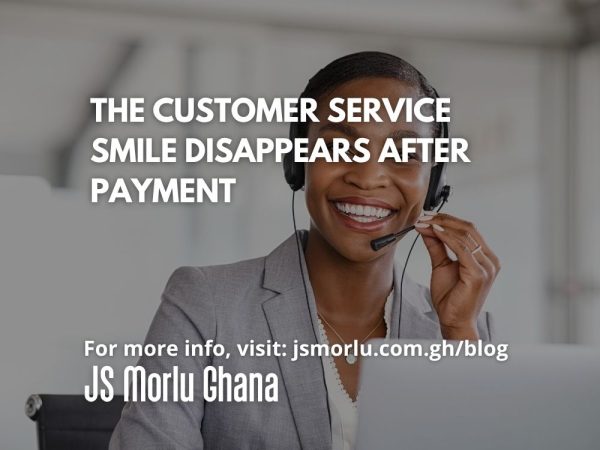
The Business Culture Problem Nobody Wants to Discuss
“Some businesses treat customer service like a first date — amazing at the beginning, confusing afterward.”
Before payment, the customer is treated like royalty.
The staff smile warmly.
Calls are answered immediately.
WhatsApp replies arrive in seconds.
Everybody says:
“Please, you are most welcome.”
Then payment is made.
Suddenly:
- nobody answers the phone,
- delivery timelines become mysterious,
- complaints move between departments endlessly,
- and customer service energy disappears into another dimension.
Welcome to one of the quietest business problems affecting many organizations:
Poor after-sales service.
The Sale Is Not the Relationship
Many businesses focus heavily on:
- attracting customers,
- closing deals,
- generating sales,
- and collecting payments.
But long-term business success depends heavily on what happens after payment.
That is where:
- trust,
- loyalty,
- reputation,
- and repeat business are built.
Or destroyed.
Some organizations operate as if the customer relationship ends immediately after money changes hands.
That mindset becomes extremely expensive over time.
Customers Remember Frustration More Than Advertising
A company may spend heavily on:
- branding,
- social media,
- billboards,
- and marketing campaigns.
But one terrible customer experience can destroy months of reputation-building.
Customers rarely forget:
- unanswered complaints,
- rude responses,
- delayed refunds,
- broken promises,
- or being ignored after payment.
And in today’s digital environment, frustrated customers now share experiences publicly:
- online reviews,
- WhatsApp groups,
- Facebook posts,
- and word-of-mouth conversations.
Bad service travels fast.
Sometimes faster than marketing.
Complaint Handling Is Often Emotionally Poor
One major weakness in some organizations is how staff respond when customers raise concerns.
Instead of solving problems, employees may become:
- defensive,
- dismissive,
- irritated,
- or uninterested.
The customer reports a problem.
The company responds as if the customer personally insulted management.
That reaction damages trust immediately.
Professional businesses understand:
complaints are not attacks.
They are operational feedback.
And sometimes they are opportunities to retain customers who were prepared to leave quietly.
Weak Service Culture Usually Starts Internally
Poor customer service rarely begins with customers.
It often begins inside the organization.
Employees who:
- feel unsupported,
- lack training,
- receive poor leadership,
- or operate in chaotic environments
eventually transfer frustration outward.
That frustration reaches customers.
Service culture is heavily influenced by:
- leadership behavior,
- accountability,
- training,
- operational structure,
- and workplace environment.
You cannot build excellent customer experiences consistently inside dysfunctional operations.
Eventually the internal culture leaks outward.
After-Sales Support Is a Competitive Advantage
Many businesses still underestimate how powerful strong after-sales support can become.
In highly competitive markets, customers increasingly value:
- responsiveness,
- professionalism,
- consistency,
- transparency,
- and reliability.
Products matter.
Pricing matters.
But experience matters too.
Sometimes customers remain loyal to businesses not because they are cheapest…
but because they are dependable.
That trust creates long-term value.
Inconsistent Service Creates Confused Brands
One common problem in many organizations is inconsistency.
A customer may receive:
- excellent service on Monday,
- confusion on Wednesday,
- and complete silence on Friday.
This inconsistency damages brand credibility.
Because customers should not need luck to receive professional treatment.
Strong organizations create systems that produce consistent experiences regardless of:
- location,
- employee mood,
- or time of day.
That consistency separates mature businesses from reactive ones.
Staff Training Is Often Treated as Optional
Many businesses invest heavily in:
- products,
- offices,
- vehicles,
- and marketing.
But very little in customer service training.
Then management becomes surprised when employees:
- mishandle complaints,
- communicate poorly,
- escalate tension,
- or frustrate customers unnecessarily.
Customer service is not merely personality.
It is a professional skill.
And like any skill, it requires:
- training,
- structure,
- supervision,
- and accountability.
Consumer Trust Is Becoming More Valuable
Modern customers have more options than ever before.
They can:
- compare businesses,
- read reviews,
- switch providers,
- and publicly share experiences quickly.
That means trust has become one of the most valuable business assets.
Organizations that consistently:
- communicate clearly,
- solve problems professionally,
- and treat customers respectfully
build reputational strength over time.
That strength compounds quietly.
Ghanaian Businesses Have Huge Opportunity Here
To be fair, many businesses in Ghana are improving significantly.
Companies increasingly understand that:
- customer experience,
- professionalism,
- responsiveness,
- and service quality
directly affect growth.
This evolution is important.
Because Ghana’s private sector is becoming more competitive, more digital, and more customer-driven.
The businesses that dominate long-term will not simply be the loudest marketers.
They will be the most reliable operators.
Final Thought
Customer service is not decoration.
It is operational strategy.
Every customer interaction affects:
- trust,
- retention,
- reputation,
- referrals,
- and long-term profitability.
Businesses spend enormous effort trying to attract new customers.
Sometimes the bigger opportunity is simply keeping the existing ones happy.
Because eventually customers stop asking:
“Is your product good?”
And start asking:
“Will this company respond when problems happen?”
And in business…
that question matters far more than many organizations realize.