
By: Jackline Sackey
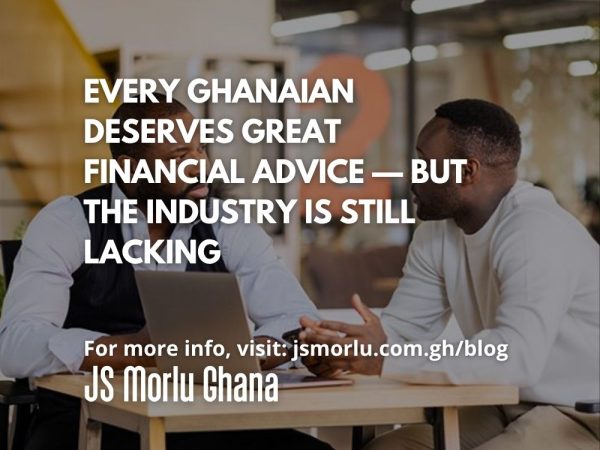
Across Ghana, people work hard every day to earn income, build businesses, support families, and create better futures. Yet despite this effort, many individuals and small business owners still struggle with one major problem: access to reliable financial advice.
For many people, financial decisions are often based on:
- Guesswork
- Social media opinions
- Friends and family recommendations
- Informal advice
- Trial and error
Unfortunately, poor financial decisions can have long-term consequences. This is why quality financial guidance is no longer a luxury. It is becoming a necessity.
Financial Advice Should Not Be Reserved for the Wealthy
In many markets, professional financial advice is often associated with:
- Large corporations
- High-net-worth individuals
- Investors
- Executives
Meanwhile, ordinary workers, small business owners, and growing entrepreneurs are often left to figure things out alone. But financial advice matters at every level.
People need guidance on:
- Budgeting
- Saving
- Debt management
- Business finances
- Taxes
- Investments
- Cash flow
- Retirement planning
- Financial discipline
A small financial mistake repeated for years can become a major setback. Good advice helps people avoid expensive lessons.
Many Businesses Operate Without Financial Direction
A large number of SMEs in Ghana operate without structured financial guidance.
Some businesses:
- Do not track profitability properly
- Mix personal and business funds
- Lack budgets
- Ignore cash flow management
- Delay financial reporting
- Operate without long-term planning
As a result, businesses may generate revenue but still struggle financially. Growth without financial visibility creates instability.
Strong financial advice helps businesses move from survival mode toward sustainable growth.
Financial Literacy Gaps Remain Significant
One of the biggest challenges is that financial literacy levels remain uneven across many sectors.
Many people are never formally taught:
- How money works
- How debt compounds
- How to build wealth responsibly
- How to manage risk
- How to interpret financial information
This creates vulnerability.
People may:
- Overspend
- Mismanage debt
- Fall for financial scams
- Make poor investment decisions
- Operate businesses inefficiently
Financial literacy is not just about numbers. It is about improving decision-making.
Trust Is a Major Issue
Another challenge is trust.
Some individuals hesitate to seek financial advice because they fear:
- Hidden motives
- Poor guidance
- Mismanagement
- Lack of professionalism
This is why professionalism, ethics, transparency, and competence are critical in the financial advisory industry.
People deserve advisors who educate, guide, and support responsible decision-making — not simply sell products or exploit financial uncertainty.
Good financial advice should create clarity, not confusion.
Technology Is Changing Financial Access
The good news is that technology is improving access to financial tools and information.
Digital platforms now make it easier for people to:
- Access financial education
- Use budgeting tools
- Track expenses
- Make digital payments
- Access accounting systems
- Improve financial visibility
However, tools alone are not enough. People still need trusted guidance to make informed decisions. Technology works best when combined with financial understanding.
Financial Advice Can Strengthen the Economy
When individuals and businesses make better financial decisions:
- Businesses become stronger
- Savings improve
- Investment grows
- Financial stability increases
- Economic resilience improves
Strong financial management does not only benefit individuals. It benefits the wider economy. A financially informed society is often more stable, productive, and resilient.
Ghana’s Financial Advisory Industry Has Significant Opportunity
The demand for quality financial guidance in Ghana continues to grow.
Businesses and individuals increasingly need support with:
- Financial planning
- Accounting systems
- Tax compliance
- Business strategy
- Investment readiness
- Operational efficiency
This creates a major opportunity for trusted professional firms that combine:
- Technical expertise
- Ethics
- Transparency
- Technology
- Customer-focused support
The future of financial advisory will likely belong to firms that make quality financial guidance more accessible, practical, and understandable.
How JS Morlu Ghana Supports Businesses and Individuals
At JS Morlu Ghana, we believe that quality financial guidance should help people make smarter decisions, strengthen operations, and build sustainable futures.
Our services support businesses and organizations through:
- Accounting and financial advisory
- Business consulting
- Operational improvement
- Financial reporting
- Risk management
- Strategic planning
- Technology-enabled solutions
Because every business owner, entrepreneur, and professional deserves access to financial guidance that is practical, ethical, and focused on long-term success.
Author: Jackline Sackey is a Marketing Analyst with experience in customer engagement, sales coordination, administration, and market research. She supports business development and outreach initiatives across sectors including finance, fintech, real estate, and professional services. Her interests include digital transformation, business operations, customer experience, and market strategy.