
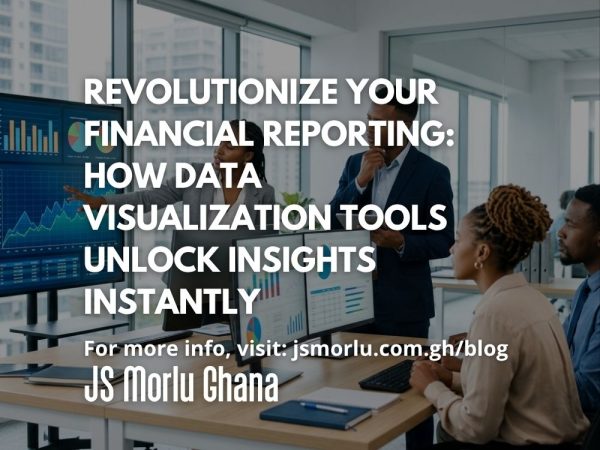
Financial reporting plays a vital role in how organizations communicate their financial health and performance to stakeholders. Traditionally, this communication happens through financial statements such as the balance sheet, income statement, cash flow statement, statement of changes in equity, and supporting notes. While these documents provide valuable insights, many non-finance professionals struggle to interpret them due to their complexity.
Today, advanced technologies especially data visualization tools are revolutionizing this process. By turning financial data into intuitive visuals, organizations can enhance understanding, improve decision-making, and strengthen communication across all stakeholder groups.
What Is Data Visualization?
Data visualization is the graphical representation of information using charts, diagrams, infographics, or dashboards. When applied to financial reporting, visualization tools help translate complex numbers into clear and interactive visuals that can be understood at a glance.
With modern technology, finance teams can now collect, analyze, and present data more efficiently by leveraging visualization tools that simplify the way financial information is communicated.
What Are Data Visualization Tools?
Data visualization tools are software applications that enable organizations to transform raw datasets into visual formats such as graphs, heat maps, or dashboards. These tools help finance teams uncover patterns, monitor trends, and communicate insights more effectively.
Many of these applications offer:
- Drag-and-drop interfaces for non-technical users
- Dashboard creation for real-time monitoring
- Integration with databases, accounting systems, and cloud tools
- Support for large and complex datasets
While some visualization tools require basic coding knowledge, most modern platforms are user-friendly, making them accessible across different departments.
Key Benefits of Data Visualization in Financial Reporting
1. Saves Time and Increases Efficiency
Stakeholders often struggle to navigate traditional financial reports filled with lengthy text and numerical tables. Visualization tools reduce this burden by presenting information in concise, interactive formats. Search functions, filters, and dashboards allow users to quickly find what matters most saving time and improving overall report engagement.
2. Helps Detect Anomalies and Patterns
Visuals make it easier to spot unusual trends, errors, or potential fraud risks. Auditors and compliance teams can analyze graphs more efficiently than traditional tables. Many financial institutions use visualization dashboards for fraud detection, risk management, and internal control monitoring.
3. Enables Quick Trend Identification
Instead of sorting through countless rows and columns, organizations can instantly generate visuals such as bar charts, line charts, or heat maps to identify performance patterns. For example, a monthly transactions graph can help leadership quickly assess performance and adjust strategies based on emerging trends.
4. Promotes Unified Understanding
Visuals act as a single source of truth by presenting financial information in a standardized, easy-to-understand format. This ensures that all stakeholders management, employees, regulators, and investors are aligned on the same data. Visualization tools also enhance collaboration and real-time data sharing across departments.
5. Enhances Data Interpretation
Most people are visual learners. Visualization tools simplify the interpretation of complex financial information, making it easier to extract insights from large datasets. Unlike traditional static reports that rely on outdated historical data, visualization platforms offer real-time updates that strengthen decision-making.
6. Improves Decision-Making
With interactive visuals, finance teams can drill into data, highlight key insights, and communicate compelling stories that build stakeholder confidence. This interactive approach enhances planning, forecasting, and financial analysis especially during periods of market volatility or declining investment performance.
How to Apply Data Visualization Effectively
To maximize the impact of visualization tools in financial reporting, organizations should pay attention to three key factors:
1. Choose the Right Data Sources
Accurate reporting depends on clean, relevant data. Finance teams must ensure they gather reliable data from the right sources to maintain credibility and avoid errors.
2. Select the Best Visualization Tool
The market is filled with different visualization platforms ranging from automated cloud-based accounting solutions to advanced analytics tools. The choice should depend on the organization’s reporting needs, budget, and level of expertise.
3. Understand Stakeholder Expectations
Stakeholders have diverse interests internal stakeholders look for operational insights, while external stakeholders (regulators, investors, tax authorities) require compliance and transparency. Visualization strategies should be aligned with these expectations to ensure clarity and trust.
Conclusion
Data visualization tools allow finance teams to present complex financial information in a more accessible and compelling format. By identifying valuable insights faster and communicating financial reports clearly, stakeholders can strengthen financial planning, analysis, and overall decision-making. In today’s data-driven environment, adopting these tools is essential for any organization aiming to improve accuracy, efficiency, and transparency.
Jumping on modern accounting software such as FinovatePro makes this transition even easier, providing integrated tools that simplify financial reporting, automate processes, and enhance data visualization for better business performance.